Pregnancy changes your body—but what about your mouth?
Your gums may bleed when you brush. Your toothpaste might suddenly make you nauseated. Even a two-minute routine can feel like one more exhausting task.
If caring for your teeth feels harder during pregnancy, you are not imagining it. And you are definitely not alone.
The good news? You do not need a perfect routine to protect your smile.
A few small changes can go a long way.
Why Might Your Mouth Change During Pregnancy?
Pregnancy hormones can make your gums more sensitive to plaque. Even a small amount of plaque may cause more irritation than it did before pregnancy.
Your gums may become:
- Red or swollen.
- Sore or tender.
- More likely to bleed when you brush or floss.
This is called pregnancy gingivitis, or inflammation of the gums. According to the Centers for Disease Control and Prevention (CDC), about 60% to 75% of pregnant women experience it.
Your gums are not being dramatic. They are responding to real changes happening throughout your body.
Some people also notice a small, red bump on the gums that bleeds easily. This bump is usually harmless and linked to irritation. Still, ask a dentist to check it if it hurts, bleeds often, or gets in the way of eating or brushing.
Does Pregnancy Make Cavities More Likely?
Pregnancy itself does not automatically cause cavities. However, some pregnancy-related changes can make teeth more vulnerable.
For example, you may:
- Snack more often.
- Crave sweet or starchy foods.
- Drink more sweetened beverages.
- Brush less because of nausea or fatigue.
- Expose your teeth to stomach acid when you vomit.
These changes are common. The goal is not a perfect routine—it is finding small ways to protect your teeth when you can.
Can You Go to the Dentist While You Are Pregnant?
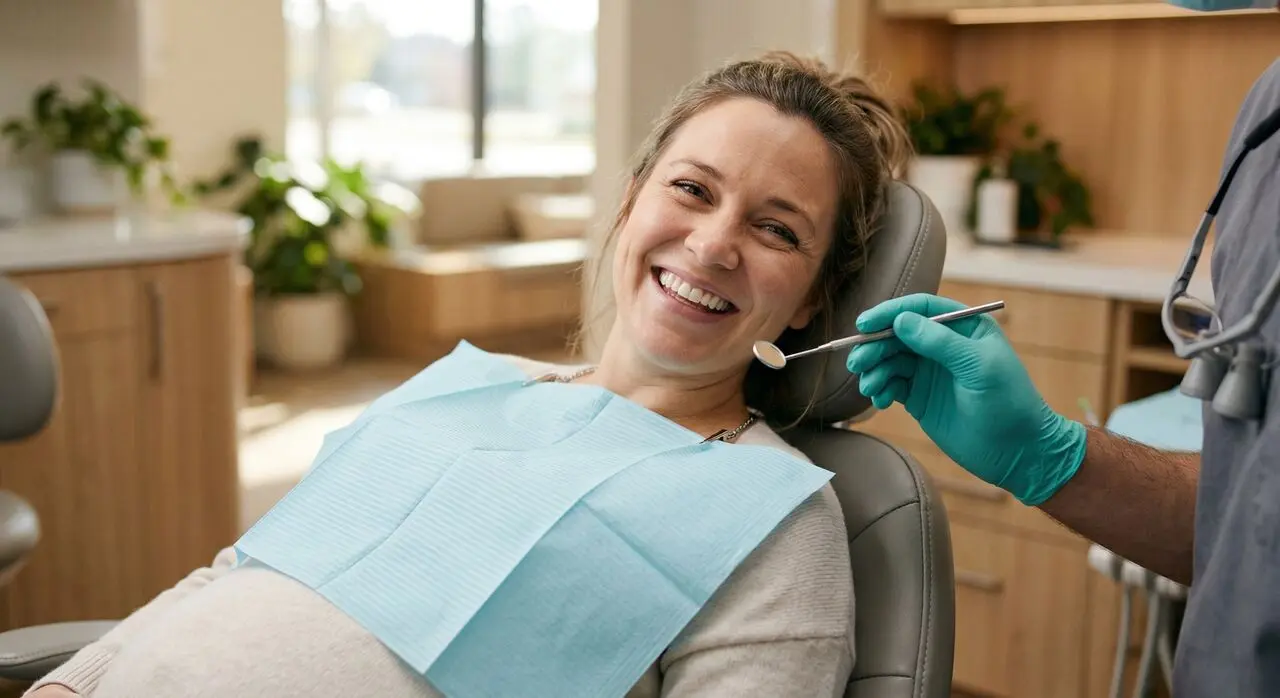
Yes. Dental care is safe and important during pregnancy.
The American Dental Association (ADA) says preventive, diagnostic, restorative, and surgical dental treatment is safe throughout pregnancy. This may include:
- Dental exams and cleanings.
- Fillings and crowns.
- Root canals.
- Tooth extractions.
- Dental X-rays when needed.
- Local anesthesia, or medicine used to numb the area.
Your dental team is there to help—being open about your pregnancy gives them the information they need to plan your care.
Let them know:
- That you are pregnant and how far along you are.
- Which medicines or supplements you take.
- Whether your pregnancy is high-risk or you have another medical condition.
What If You Need Medicine for Tooth Pain or an Infection?
Your dentist may suggest speaking with your prenatal care provider before recommending medicine or treatment.
Together, they can choose an option that fits your pregnancy and health needs. Pregnancy may change which medicines they recommend, but do not mean you have to manage pain or an infection on your own.
Your dental team is there to help—not to judge. Sharing the full picture helps them make your visit feel safe and comfortable.
Is It Safer to Wait Until After Pregnancy for Dental Treatment?
No—not if you have pain, swelling, or signs of infection. The safest first step is to let a dentist evaluate the problem.
Some care may be able to wait. Elective or non-urgent treatment can sometimes be scheduled around your comfort and health needs.
But do not put off:
- Tooth pain that does not go away.
- Swelling in your gums, face, or jaw.
- A bump, bad taste, or drainage near a tooth.
- Pain that makes it hard to eat.
- Fever, facial swelling, or trouble breathing or swallowing.
A tooth infection does not mean your baby will “catch” the same infection. However, an untreated infection can spread into nearby tissues or other parts of your body, causing you more pain and discomfort.
Not sure what can wait? Call your dentist. They can examine the problem and help you choose the safest timing.
The important thing to know? You are part of the decision. Tell your dentist about your concerns, pregnancy, medicines, and health needs so they can plan care with you.
How Can Your Oral Health Affect Your Baby?
Your mouth is part of your whole health. Caring for it supports your comfort and well-being during pregnancy.
Research has found a link between periodontitis—a serious form of gum disease—and preterm birth or low birth weight. Researchers are still studying the connection, and a link does not mean gum disease directly causes these outcomes.
This is not a reason to panic or feel guilty. It is simply one more reason to make oral health part of prenatal care.
Your oral health can matter after your baby arrives, too. Cavity-causing bacteria can pass from a caregiver’s mouth to a baby through saliva.
You can lower the chance of sharing these bacteria by avoiding:
- Sharing spoons with your baby.
- Cleaning a pacifier with your mouth.
- Testing a bottle nipple with your mouth.
These are small habits—not rules to worry about. One missed brushing or one shared spoon does not mean you have harmed your child.
What Small Changes Can Protect Your Smile During Pregnancy?
Pregnancy can make even simple routines feel complicated. Start with the tips that fit your day.
If Brushing Makes You Feel Sick
- Change the timing. Brush when your nausea is usually lowest, even if that is not your usual time.
- Try a smaller toothbrush. A smaller head may be less likely to trigger your gag reflex.
- Choose a mild flavor. If strong mint makes you nauseated, try a milder fluoride toothpaste.
- Break up your routine. If brushing and flossing together feels overwhelming, do them at different times.
- Start again later. One difficult morning does not erase your progress.
If Your Gums Are Sore or Bleeding
- Use a soft-bristled toothbrush and gentle pressure.
- Brush twice a day with fluoride toothpaste.
- Clean between your teeth once a day with floss or another tool recommended by your dental team.
- Do not stop brushing an area just because it bleeds. Gentle cleaning helps remove the plaque causing irritation.
- Ask a dentist for help if bleeding, swelling, or pain continues.
If You Vomit
Stomach acid can temporarily soften the outer surface of your teeth. Avoid brushing immediately afterward.
Instead:
- Rinse with plain water.
- Or mix 1 teaspoon of baking soda into 1 cup of water, rinse, and spit it out.
- Give your mouth time to settle before brushing.
If You Are Snacking More Often
- Drink water throughout the day.
- Choose lower-sugar snacks when they sound manageable.
- Try to eat sweet or starchy foods with a meal instead of nibbling over a long period.
- Chew sugar-free gum after eating if you cannot brush and your healthcare team says gum is okay for you.
If You Have Not Seen a Dentist Recently
Make an appointment—even if nothing hurts. A dental team can catch small problems and clean away hardened plaque.
They can also help you build a routine that works with your pregnancy symptoms.
No parent guilt here. Nausea, cravings, pain, and low energy are real.
The goal is not to do everything perfectly. It is to choose the next small step that feels possible.
What Is the Little-Smile Takeaway?
Pregnancy can change your gums, eating habits, and daily routine. Dental problems do not need to be placed on hold until your baby arrives.
Dental care is safe during pregnancy, and needed treatment should not be delayed. If you have pain, swelling, or signs of infection, call a dentist.
If brushing feels difficult, try one small adjustment. You can begin again at the next brushing.
You are already caring for so much. Your smile deserves care, too.
Need help finding a dental home? Smile Onward can help connect you with care that fits your family’s needs.
This article is for general education and is not a substitute for personal medical or dental advice. Talk with your dentist and prenatal care provider about care that is right for you.
Sources
- American Dental Association. Pregnancy. Updated July 14, 2025..
- Centers for Disease Control and Prevention. Talking to Pregnant Women About Oral Health. May 15, 2024..
- Corbella S, et al. Adverse pregnancy outcomes and periodontitis: a systematic review and meta-analysis exploring potential association. *Quintessence International*. 2016;47(3):193–204..
- National Maternal and Child Oral Health Resource Center. Oral Health Care During Pregnancy: A National Consensus Statement..
- Ohio Department of Health. Pregnancy and Oral Health. Revised July 2024..
Evidence Notes: Exact Language and How It Was Paraphrased
1. Dental treatment during pregnancy
Exact ADA language: “Preventive, diagnostic, restorative and surgical dental treatment rendered to promote health and eliminate disease is safe throughout pregnancy.”
Article paraphrase: “The American Dental Association (ADA) says that preventive, diagnostic, restorative, and surgical dental treatment is safe throughout pregnancy.”
The ADA also states: “Emergency treatments, such as extractions, root canals or restorations can be safely performed during pregnancy and ... delaying treatment may result in more complex problems.”
Article paraphrase: Needed fillings, root canals, and extractions can be performed during pregnancy, and waiting may allow the problem to become larger or harder to treat.
2. Pregnancy gingivitis
Exact CDC language: “About 60% to 75% of pregnant women have gingivitis, an early stage of periodontal disease.”
Article paraphrase: “According to the Centers for Disease Control and Prevention (CDC), about 60% to 75% of pregnant women experience gingivitis.”
3. Gum disease and pregnancy outcomes
Exact CDC language: “Periodontitis has also been associated with poor pregnancy outcomes, including preterm birth and low birth weight. However, how periodontitis may lead to adverse pregnancy outcomes is not yet fully understood.”
Article paraphrase: Research has found a link between periodontitis and outcomes such as preterm birth and low birth weight, but researchers do not fully understand the connection and have not shown that gum disease alone causes those outcomes.
The CDC cites a scientific systematic review and meta-analysis by Corbella and colleagues for this statement.
4. Sharing cavity-causing bacteria
Exact CDC language: “Women with a lot of cavity-causing bacteria during and after pregnancy could transmit these bacteria from their mouth to the mouth of their baby.”
Article paraphrase: Cavity-causing bacteria can pass from a caregiver’s mouth to a baby through saliva, so improving the caregiver’s oral health may reduce the amount of harmful bacteria available to be shared.