

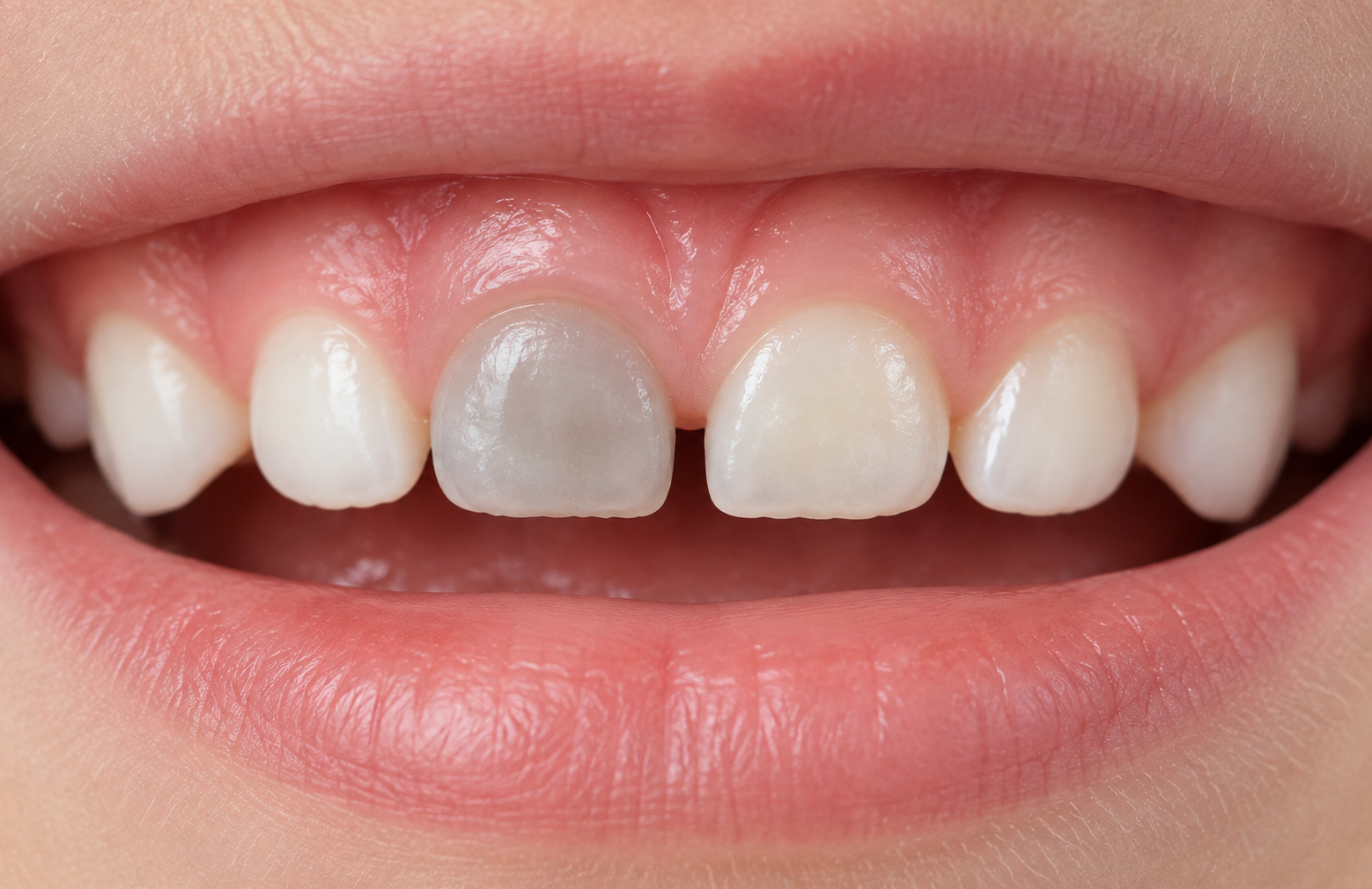
All of a sudden, you notice that one of your child’s teeth looks darker than the rest—almost gray.
Did something happen to it? Is it infected? Does it need to come out?
Take a breath—we know a gray tooth can look alarming. It deserves a dental check, but the color alone doesn’t tell the whole story.
Let’s break it down together: what the color may mean, what your child’s dentist will look for, and when it’s best to call sooner.
Why Do Teeth Turn Gray?
Teeth may feel rock-solid, but there’s more happening beneath the surface. Inside each tooth is the pulp—a soft center containing nerves and blood vessels.
Sometimes, when a tooth is bumped, pushed, or hit, the pulp and its blood supply can be injured. Changes to the pulp can then make the whole tooth look pink, red, gray, or darker than the teeth beside it.
How Quickly After an Injury Can a Tooth Turn Gray?
Not every bumped or knocked tooth will turn gray.
When a color change does happen, there’s no exact timeline. It may appear soon after the injury or show up weeks—even months—later.
That can make it tricky to connect a gray tooth with an old playground tumble, sports collision, or little bump that seemed harmless at the time.
Can a Gray Tooth Be Healthy—or Infected?
A gray tooth can be healthy, or it can be a sign that the pulp inside the tooth has been injured or infected. The shade alone cannot tell us which is happening.
Some baby teeth stay dark after an injury but remain comfortable and look healthy on an X-ray. Others develop pain, swelling, a gum bump, drainage, or changes around the root.
That’s why a dental visit matters, even when your child seems comfortable. Their dentist can check the whole picture and decide whether the tooth simply needs watching or would benefit from treatment.
What If I Never Saw My Child Hit the Tooth?
Children are busy, and small dental injuries are easy to miss. A toddler may fall, bump a table, or collide with another child and feel fine a few minutes later. The tooth can still change color later.
An old bump is a common reason for one tooth to turn gray—but it isn’t the only possibility. Your child’s dentist may also consider:
- Tooth decay or a large filling
- A developmental difference in the enamel or dentin
- Staining on the outside of the tooth
The number of teeth affected can offer a clue. One dark tooth may point toward a local problem, such as an old injury. Changes across several teeth may suggest a different cause.
The good news? You don’t have to solve the mystery on your own. An exam—and an X-ray when needed—can help your child’s dentist understand what’s happening and guide the next step.
Does It Matter If the Gray Tooth Is a Baby Tooth or a Permanent Tooth?
Yes. Baby teeth and permanent teeth have different jobs, root shapes, and treatment options.
With a gray baby tooth, the dental team will consider your child’s age, symptoms, and the developing permanent tooth underneath it.
- If the tooth is comfortable and shows no signs of infection, the dentist may simply keep an eye on it over time.
- If signs of infection or other concerns appear, treatment or removal may be the healthiest next step.
A permanent tooth needs its own evaluation because it’s meant to grow with your child for life. The dentist may use an exam, X-rays, and follow-up visits to see how the tooth responds over time.
- Depending on what they find, the plan may include monitoring, protecting the pulp, or another option tailored to your child.
Every child’s situation is a little different. The reassuring part is that your dental team can look beyond the color and recommend the care that best fits your child’s tooth.
How Will the Dentist Check a Gray Tooth?
Think of the visit as a little detective work. The dentist may ask when you first noticed the change and whether your child has had a recent or past mouth injury.
They may also look at:
- The exact color and whether it is changing
- Whether the tooth is chipped, cracked, loose, or out of position
- Pain, tenderness, or sensitivity
- The gums around the tooth
- How the tooth responds during the exam
- What the root and surrounding bone look like on an X-ray, when one is needed
Sometimes, one visit won’t answer every question—and that’s okay. Follow-up visits help the dental team watch how the tooth responds over time.
When Should I Call the Dentist?
If you notice a tooth turning gray or dark, give your child’s dentist a call—even if there’s no pain. The office can help you decide how soon the tooth should be checked, giving you a clearer plan and a little more peace of mind.
Contact the dental office sooner if your child has:
- Pain that continues or wakes them up
- Swelling of the gums, face, or jaw
- A pimple-like bump on the gum near the tooth
- Drainage, a bad taste, or bad breath coming from the area
- Increasing looseness or a tooth that has moved out of position
- Trouble biting, eating, or brushing
- Fever along with facial or dental swelling
These symptoms can be signs of infection or another concern, so it’s best to have the tooth checked promptly.
What Can I Do While We Wait for the Appointment?
- Keep the area clean with gentle brushing unless your dental team gives different instructions.
- Offer softer foods if the tooth is tender.
- Encourage your child not to wiggle or press on the tooth.
- Take a clear photo so you can track whether the color changes.
- Write down any falls or bumps you remember, even if they seemed minor.
Skip at-home whitening or attempts to cover the tooth. The best first step is letting the dental team find out why the color changed.
What’s the Little-Tooth Takeaway?
A gray tooth can look scary, but it doesn’t automatically mean the tooth is infected or needs to come out.
A few things to remember:
- A past injury is a common reason one tooth becomes gray.
- The color may fade, stay the same, or change over time.
- Color alone cannot tell whether the pulp is healthy or infected.
- The dentist will look at symptoms, the exam, and sometimes X-rays before recommending care.
- Pain, swelling, a gum bump, drainage, or increasing looseness are reasons to call sooner.
You noticed the change—and that’s an important first step. With a dental exam and a clear plan, you can help protect that little tooth and the growing smile around it. You’ve got this.
This article is for general education and is not a substitute for personal dental or medical advice. Talk with your child’s dentist about care that is right for your child.
Sources
- International Association of Dental Traumatology: Guidelines for Injuries in the Primary Dentition
- International Association of Dental Traumatology: Guidelines for Fractures and Luxations of Permanent Teeth