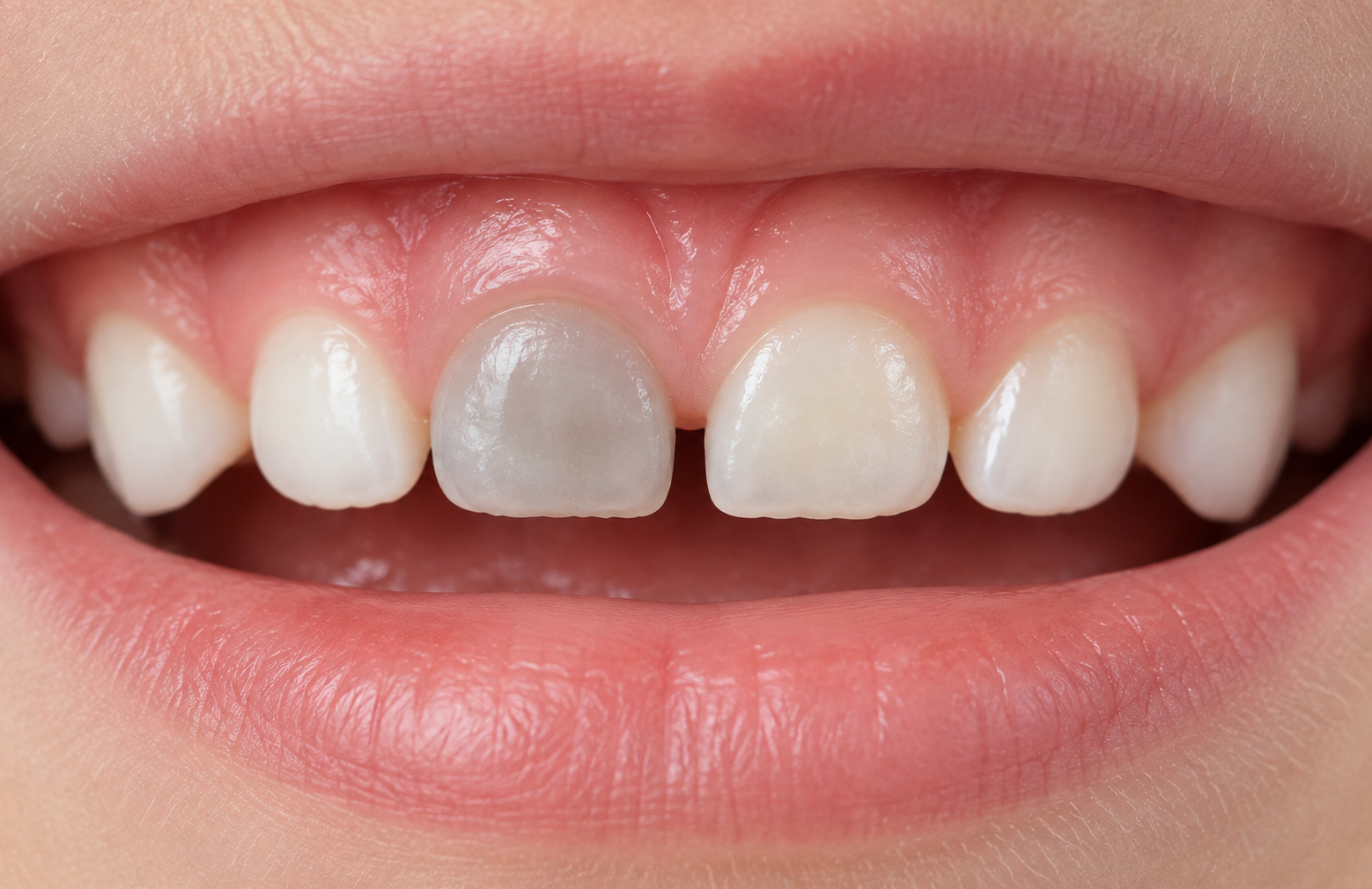


You’re helping your child brush when you spot it: a bright-white or chalky patch on a tooth.
What is it? Is it a cavity? Should you be worried?
Take a breath—you’re not the only parent who has wondered this. White spots can mean a few different things, and they’re not always tooth decay. Let’s make the difference simple.
Why Do Teeth Get White Spots?
It all starts with enamel, the hard outer layer that protects each tooth. Enamel gets its strength from minerals. A white spot can appear when enamel loses minerals after the tooth comes in—or when the enamel forms differently beneath the gums.
The biggest clue is when the change happened:
- After the tooth came in: Plaque may have caused the enamel to lose minerals.
- While the tooth was forming: The enamel may have developed differently because of enamel hypomineralization or dental fluorosis.
The tricky part? These spots can look a lot alike. Parents usually can’t tell the cause by color alone—and no one expects you to. A dentist can examine the enamel and help make sense of what you’re seeing.
Are White Spots Cavities?
Sometimes—but not always.
A plaque-related white spot can be an early sign of tooth decay. But a spot that formed while the tooth was still under the gums may not be decay at all. That’s why the cause matters more than the color.
What Are Plaque-Related White Spots?
Plaque is a sticky layer of harmful bacteria that builds up on teeth. When your child eats sugary or starchy foods, the bacteria make acids. Those acids can pull minerals from enamel.
Dentists call this mineral loss demineralization. It happens after a tooth has come into the mouth. The enamel may look chalky, dull, or bright white before a hole forms.
These spots often show up in places where plaque likes to hide:
- Near the gums
- Between teeth
- Around braces
- In places that are hard to brush
The big takeaway: Plaque-related spots develop when enamel that had already formed begins losing minerals. That’s different from a tooth that came in with an enamel change.
What If the Tooth Came In With the Spot?
Some teeth enter the smile with white, cream, yellow, or brown patches. This can happen when the enamel doesn’t form as strongly as expected beneath the gums. The name for this is enamel hypomineralization.
What causes this? Researchers believe health, environmental, and genetic factors may play a role, but there’s often no single clear cause.
This pre-mature enamel change can happen to both baby and permanent teeth:
- Baby teeth: It most often affects the back baby molars. A dentist may call this HSPM (Hypomineralized Second Primary Molars)
- Permanent teeth: It often affects the first adult molars and sometimes the front teeth. A dentist may call this MIH (Molar Incisor Hypomineralization).
One more thing to note: The teeth listed above—the molars and front teeth—are the most commonly affected, but hypomineralization can occur on any tooth. No matter where the spots appear, a dentist can help determine what may be causing them.
What’s the big deal with hypomineralization? Because the enamel on teeth affected by hypomineralization developed with fewer minerals, the enamel on these teeth may be softer, more sensitive, or more likely to chip after the tooth comes in.
The important thing for parents to know is that these teeth may need closer checks or added protection.
What Is Dental Fluorosis?
Dental fluorosis is another change that develops while permanent teeth are forming beneath the gums. It can happen when a young child regularly swallows more fluoride than needed during those years.
Mild fluorosis may look like faint white lines, streaks, or cloudy areas across several teeth. Parents usually don’t see it until the permanent teeth come in.
Here’s the reassuring part: Mild fluorosis isn’t tooth decay, and the enamel is usually strong. That makes it different from plaque-related mineral loss and from hypomineralized enamel, which may be weaker.
Fluoride is still a smile helper because it helps prevent cavities. A dentist or pediatrician can help families understand the right amount for a child’s age and needs.
How Can a Dentist Tell the Difference?
Think of the dental exam as a little enamel detective work. A dentist may look at:
- Where the spot appears
- Whether one tooth or several teeth are affected
- Whether the enamel feels hard, rough, or soft
- Whether the tooth is sensitive, chipped, or breaking down
- When the spot was first noticed
A photo can be helpful, but it can’t show how the enamel feels or how strong it is. An in-person exam gives the dentist the full picture.
How are white spots treated?
There isn’t one treatment for every white spot. What happens next depends on the cause and how much the enamel has changed.
- Some spots may only need to be watched.
- Some teeth may need extra protection for weaker enamel or sensitivity.
- If the enamel has chipped or a hole has formed, the dentist can explain the available care options.
The encouraging news? Many early enamel changes can be managed without drilling. A dentist can identify the cause and guide your family through the options that fit your child’s smile.
When Should the Tooth Be Checked Sooner?
A new white spot is worth mentioning to your child’s dentist. Contact the dental office sooner if the spot:
- Gets larger or darker
- Feels rough
- Develops a hole
- Causes pain or sensitivity
- Makes eating or brushing uncomfortable
- Starts to chip or break
The dental team can help decide how soon your child should be seen based on what’s changing and how the tooth feels.
Little Spot, Smart Next Step
A white spot doesn’t always mean a cavity. It does mean the enamel deserves a closer look.
You noticed the change—and that’s a great first step. A dental exam can bring clarity, peace of mind, and a plan for keeping your child’s smile healthy and happy. You’ve got this.